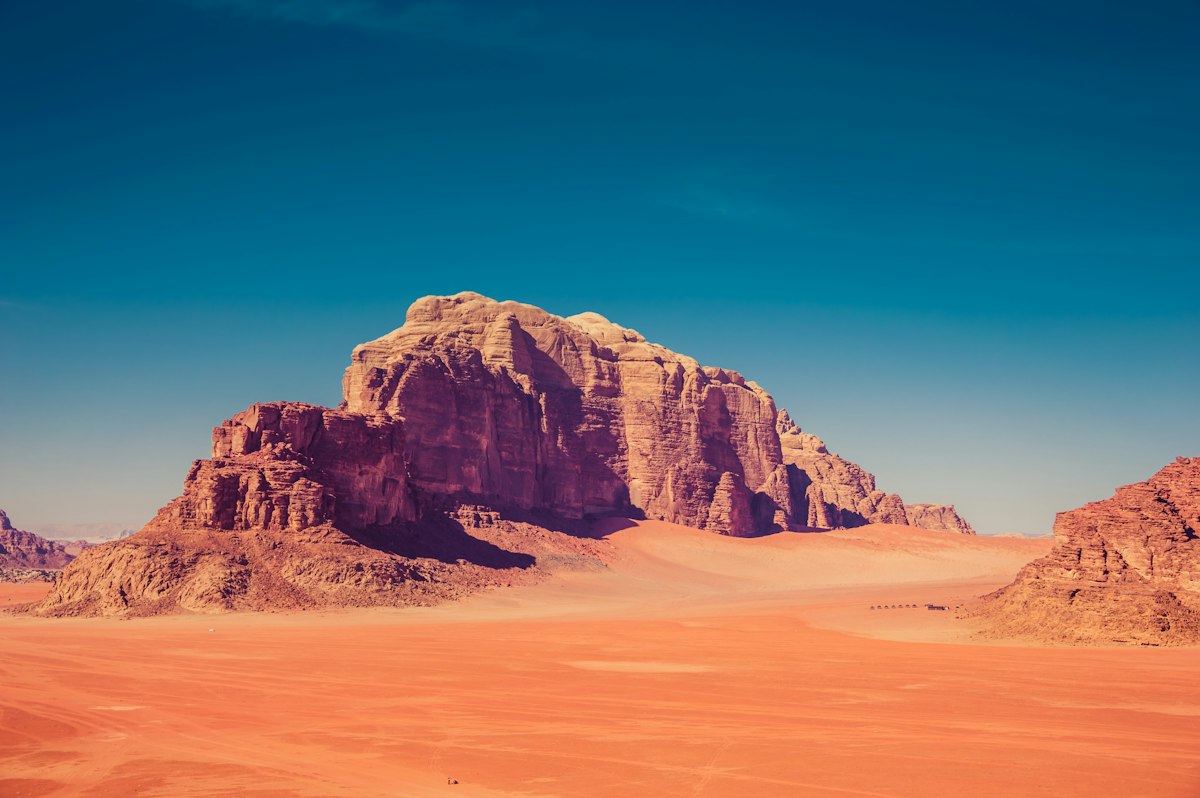
Red sand, sandstone cliffs and a sky with nothing in it: Wadi Rum in southern Jordan is a desert you cross on foot, by jeep or on a camel, and the rock does most of the talking.
What Wadi Rum is
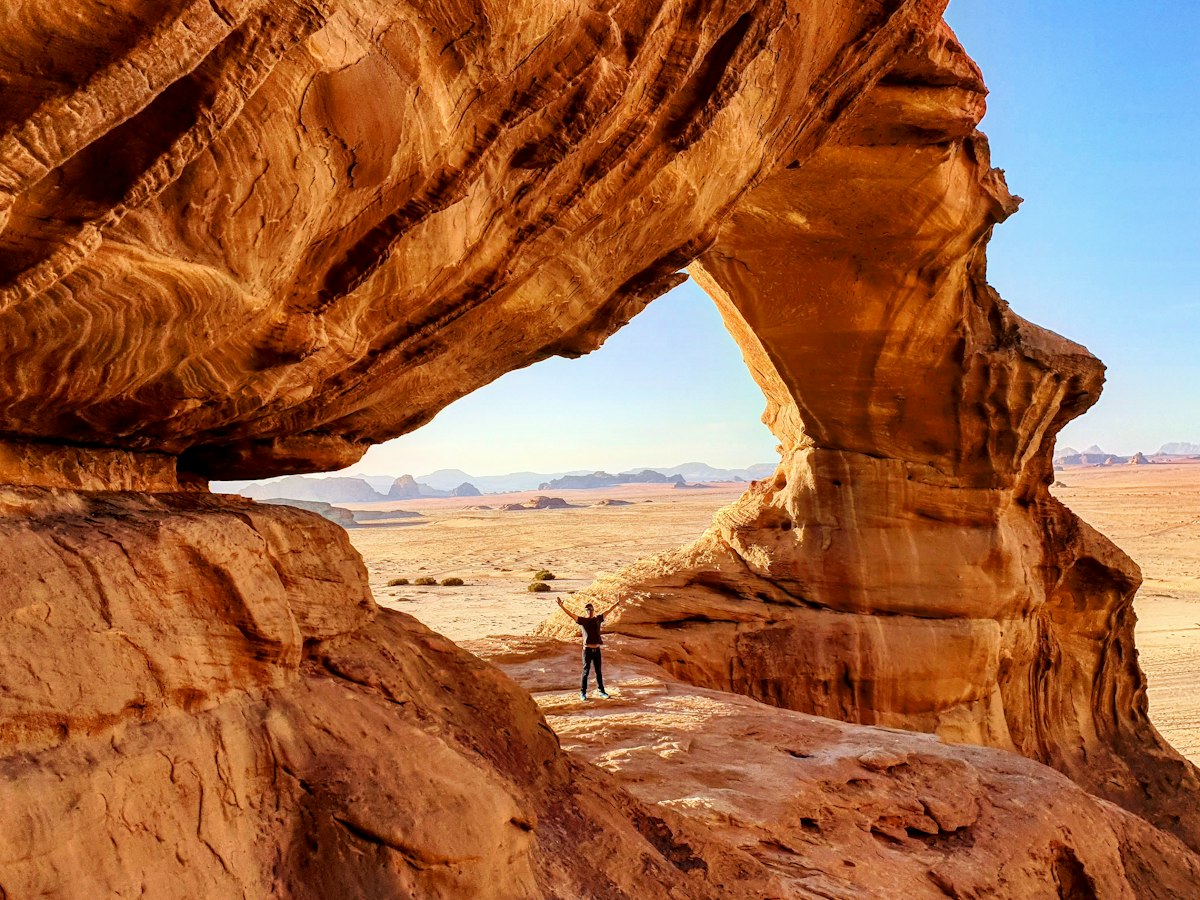
UNESCO added the Wadi Rum Protected Area to the World Heritage List in 2011 as a mixed natural and cultural site. It covers roughly 74,000 hectares near the Saudi border. UNESCO describes narrow gorges, natural arches, tall cliffs and large landslides, and rock art and inscriptions that record about 12,000 years of human activity, including some 25,000 petroglyphs and 20,000 inscriptions. Read the official entry on the UNESCO World Heritage Centre page for Wadi Rum.
How we would plan a visit
- Plan for at least a night in the desert, so you see the rock in both evening and morning light.
- Go with a local guide from the area. Tracks are not signposted like roads, and distances look shorter than they are.
- Carry more water than you think you need, plus sun cover. Check the season and the weather the day before.
Checked October 2026 against the UNESCO listing. Entry rules and permits change, so confirm them with Jordan’s official tourism and protected-area bodies before you go.
Tell us
What is the quietest place you have ever stood?
Get the Substack
New places, real routes and what we learned on the way, in your inbox every week.